

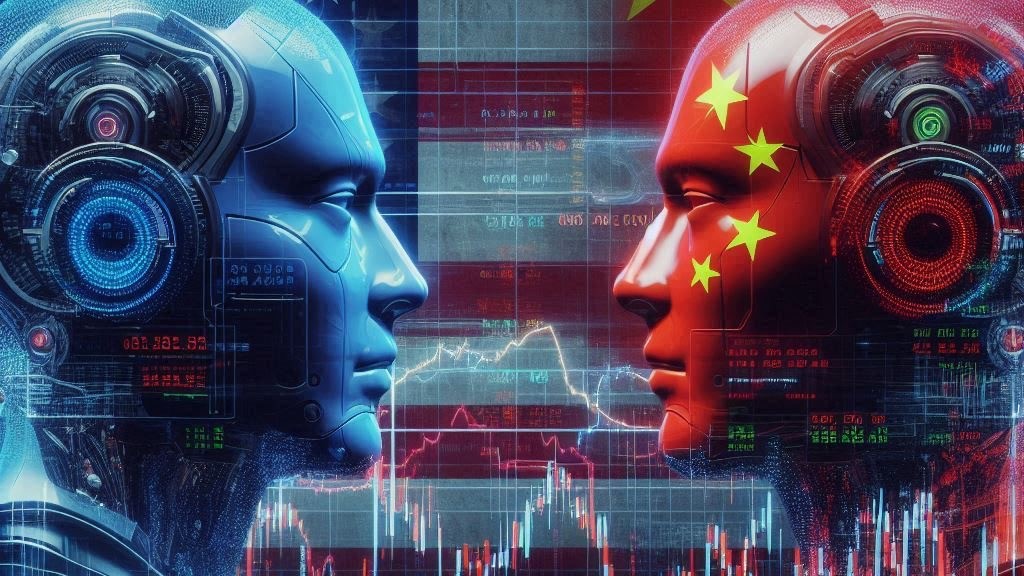
The Global AI Competition is rapidly shaping the future of technology, economy, and national power. Artificial Intelligence (AI) has become one of the most important innovations of the 21st century. Countries like the United States, China, and the European Union are investing heavily in AI development to gain global leadership in this field.
Why Global AI Competition Is Increasing
Technological Revolution
AI is transforming industries such as healthcare, finance, education, and transportation. Countries that lead in AI will control future technologies and global innovation.
Economic Growth Opportunities
AI has the potential to add trillions of dollars to the global economy. This makes it a key focus for governments and private companies.
National Security Importance
AI is not just about business; it is also linked to national security. Countries are using AI in defense systems, cybersecurity, and surveillance.
Military Advancements
AI-powered defense technologies such as drones, automated systems, and data intelligence are becoming essential for modern armies.
Major Players in Global AI Competition

United States Leadership
The United States leads in AI innovation with companies like OpenAI, Google, Microsoft, and Meta driving research and development.
Private Sector Strength
Strong private companies and venture capital funding give the US a major advantage in AI technology.
China’s Rapid Growth
China is quickly expanding its AI capabilities through government support and large-scale data access.
Government-Driven AI Strategy
China’s national AI plans focus on smart cities, facial recognition, and industrial automation.
European Union Approach
The EU focuses on ethical AI development and strict data privacy regulations.
AI Safety and Regulation
Europe aims to create responsible AI systems that protect user privacy and prevent misuse.
Impact of Global AI Competition
Job Market Transformation
AI is changing the global job market by automating repetitive tasks and creating new tech-based jobs.
Skill Development Demand
Artificial intelligence experts are in high demand across industries.
Economic and Industrial Impact
Industries are becoming more efficient due to AI integration, improving productivity and reducing costs.
Business Innovation Growth
Companies are using AI for better decision-making, customer service, and automation.
Challenges in AI Competition
Ethical Concerns
AI raises concerns about privacy, bias, and misuse of technology.
Need for Global Regulations
There is a growing demand for international rules to control AI development responsibly.
Technology Gap Between Countries
Not all countries have equal access to AI technology.
Digital Divide Issue
Developing nations may fall behind if they do not invest in AI infrastructure.
Conclusion
The Global AI Competition is reshaping the future of the world. It is not just a technological race but also an economic and political battle. Countries that successfully develop and regulate AI will lead the next era of global growth. At the same time, responsible AI development is necessary to ensure fairness, safety, and global cooperation.