
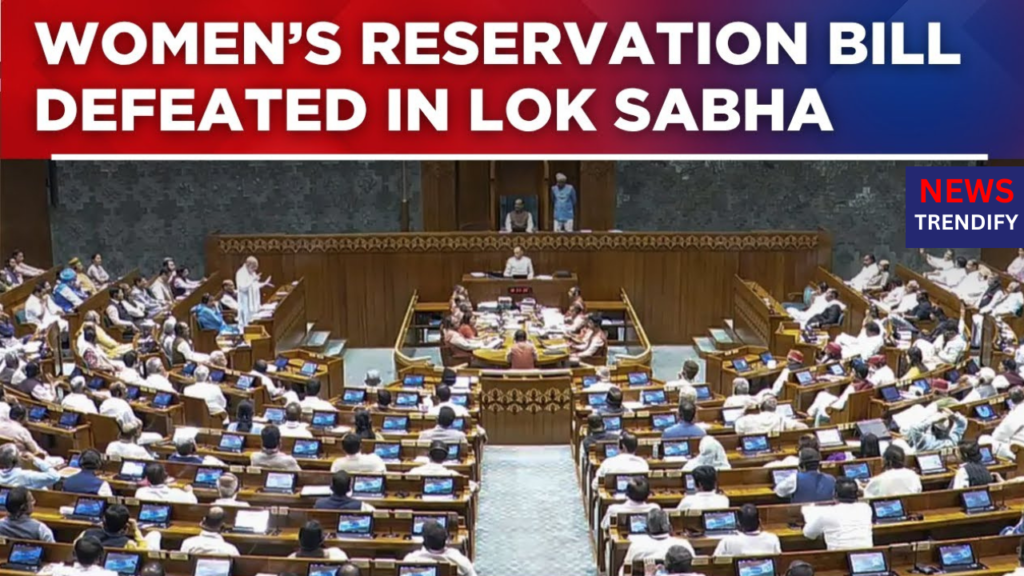
The recent failure of the Women’s Reservation Bill in the Lok Sabha has sparked intense political debate across the country. The bill, which aimed to reserve 33% of seats for women in Parliament and state assemblies, could not secure the required two-thirds majority, leading to disappointment among supporters of gender equality.
What Was the Women’s Reservation Bill?
The Women’s Reservation Bill was introduced to increase women’s participation in Indian politics. Despite years of discussion and demand, women still hold a relatively small percentage of seats in legislative bodies.
Key Objectives of the Bill
- Reserve 33% of seats for women
- Promote gender equality in politics
- Strengthen women’s decision-making power
Why It Was Important
The bill was seen as a crucial step toward empowering women and ensuring their representation in governance. Many experts believed it would bring more balanced and inclusive policy-making.
Why Did the Bill Fail in Lok Sabha?
The failure of the bill came as a surprise to many. The ruling government could not gather enough support to pass it.
Lack of Two-Thirds Majority
For constitutional amendments, a two-thirds majority is required. The bill fell short of this mark due to lack of consensus among political parties.
Delimitation Controversy
One major reason behind the opposition was the linkage of the bill with delimitation (redrawing of constituencies). Several parties feared this could affect their political influence.
Political Differences
Different parties had varying opinions on implementation timing and structure, which led to disagreements and ultimately the bill’s rejection.
Political Reactions and Public Response
The failure has triggered strong reactions from political leaders and the public.
Opposition’s Criticism
Opposition parties accused the government of not handling the bill effectively and failing to build consensus.
Government’s Stand
The government stated that it remains committed to women’s empowerment and may reintroduce the bill in the future.
Public Sentiment
Many citizens and activists expressed disappointment, calling it a missed opportunity for gender equality in India.
What Happens Next?
Even though the bill failed, the discussion around women’s representation is far from over.
Possibility of Reintroduction
The government may bring the bill again with modifications to address concerns raised by different parties.
Continued Debate
The issue is expected to remain a key topic in upcoming elections and political discussions.
Conclusion
The failure of the Women’s Reservation Bill in the Lok Sabha marks a significant moment in Indian politics. While it highlights the challenges of passing major reforms, it also underscores the urgent need for increased representation of women in governance. The coming months will be crucial in determining whether this important legislation gets another chance.