
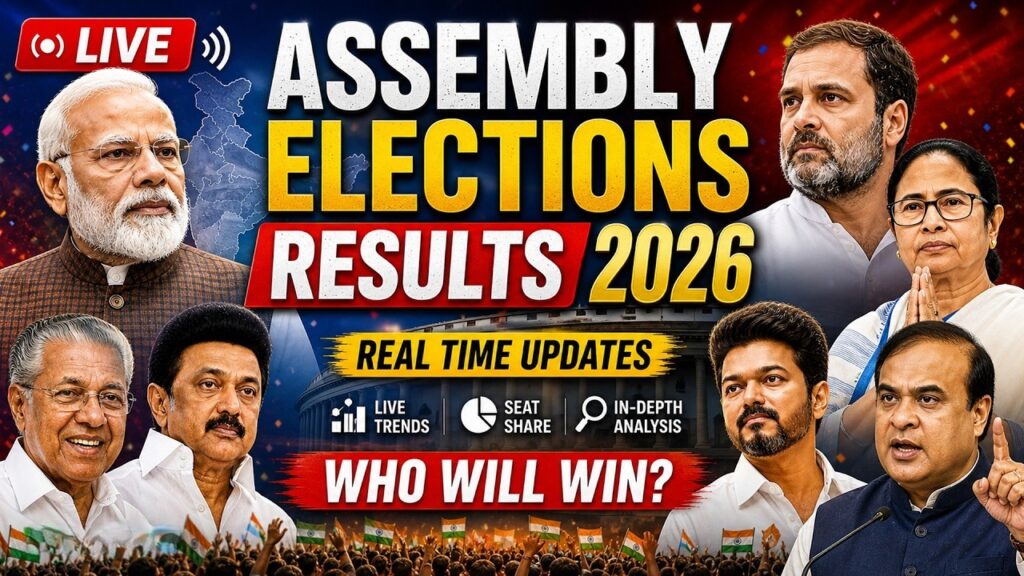
The 2026 Indian State Assembly Elections are unfolding as one of the most crucial political events in the country right now. With vote counting currently in progress, millions of citizens, political analysts, and party supporters are glued to live updates. The elections across West Bengal, Assam, Tamil Nadu, Kerala, and Puducherry are not just state-level contests—they are shaping the political narrative of India for the coming years.
At this moment, early trends are emerging, alliances are gaining or losing momentum, and the political atmosphere remains highly dynamic.
Current Status – Vote Counting in Full Swing
As of now, counting centers across all five regions are witnessing intense activity. Election officials are processing Electronic Voting Machines (EVMs) under strict security and supervision.
Real-Time Situation
- Counting began early morning under tight monitoring
- Initial rounds have already shown clear trends in some regions
- Final results are still awaited as counting continues
Public Attention at Peak
News channels, digital platforms, and social media are flooded with live election updates, making this one of the most watched political events in recent times. Citizens are actively tracking which party is leading in their respective states.
Early Trends – Who Is Ahead Right Now?
Based on the latest available trends, the Bharatiya Janata Party (BJP) is showing a strong lead in West Bengal and Assam, while southern states are witnessing tight electoral battles.
BJP’s Growing Influence
- Leading in multiple constituencies in West Bengal
- Maintaining strong performance in Assam
- Expanding footprint beyond traditional regions
Close Contest in the South
- Tamil Nadu is seeing a neck-to-neck fight between major alliances
- Kerala continues its trend of closely contested elections
These trends indicate that while national parties are gaining ground, regional parties still hold significant influence.
State-Wise Political Scenario
Each state presents a unique political story shaped by local issues, leadership, and voter expectations.
West Bengal – A High-Stakes Battle
West Bengal remains one of the most politically intense states. The current trends suggest a strong challenge between major parties, with the BJP trying to consolidate its position.
Assam – Strategic Northeastern State
In Assam, development issues, border concerns, and regional identity have played key roles. Early leads suggest continuity or strengthening of existing political power.
Tamil Nadu – Regional Dominance
Tamil Nadu politics is largely driven by strong regional parties. The competition remains tight, with alliances playing a crucial role in determining the outcome.
Kerala – Tradition of Alternating Power
Kerala is known for its pattern of alternating governments. This election is no different, with both major fronts locked in a close fight.
Puducherry – Small but Significant
Though smaller in size, Puducherry holds strategic importance, and results here often reflect broader political trends.
Key Issues That Influenced Voters
The 2026 elections have been shaped by a mix of national and regional issues.
Development and Economy
Voters have prioritized:
- Job creation
- Infrastructure projects
- Economic stability’
Welfare Schemes
Government welfare programs, including subsidies and social benefits, have significantly influenced voting behavior.
Local Concerns
Each state had its own critical issues:
- Flood and disaster management in Assam
- Industrial and urban development in Tamil Nadu
- Political stability and governance in West Bengal
Role of Leadership and Campaigns
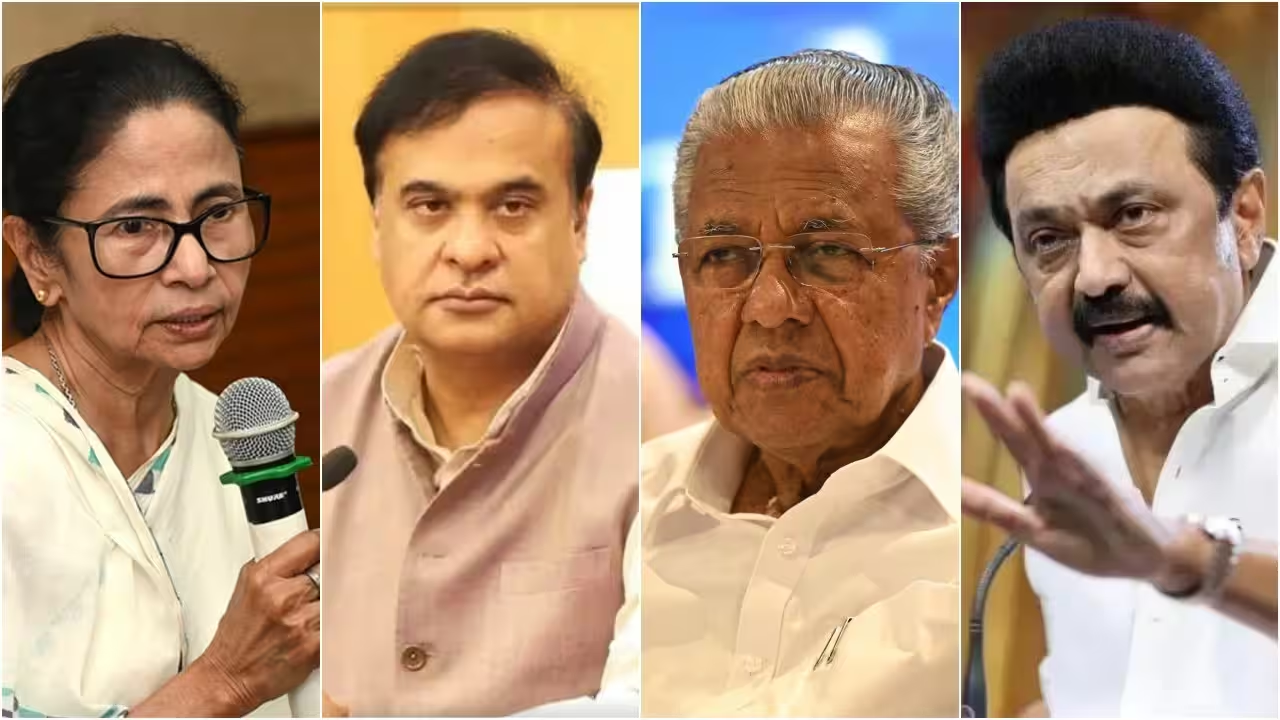
Leadership has played a decisive role in shaping voter perception.
Strong Campaign Strategies
Political parties used:
- Large-scale rallies
- Social media outreach
- Door-to-door campaigns
Digital Influence
The use of digital platforms has increased significantly, with parties targeting young voters through online campaigns and real-time engagement.
Security and Election Process
Ensuring fair and transparent elections has been a top priority.
Strict Security Measures
- Deployment of central forces
- CCTV surveillance at counting centers
- Controlled access to sensitive areas
Transparent Counting Process
Authorities have ensured:
- Real-time updates
- Proper verification of votes
- Smooth handling of EVMs
Social Media and Public Reaction
Social Media and Public ReactionThe election has gone viral across platforms, with millions of users actively discussing trends and predictions.
Nationwide Buzz
- Hashtags related to election results trending
- Continuous debates on political outcomes
- High engagement from citizens
Youth Participation
Young voters are showing increased interest in politics, engaging in discussions and analyzing results.
Possible Outcomes and Government Formation
As counting progresses, political parties are preparing for the next steps.
Government Formation Process
- Winning parties will claim majority
- Governors will invite leaders to form governments
- Coalition talks may begin in closely contested states
Policy Expectations
New governments are expected to focus on:
- Economic growth
- Employment generation
- Public welfare
Why This Election Is Going Viral
The 2026 Indian State Assembly Elections are trending nationwide due to several reasons:
High Political Stakes
- Impact on future national elections
- Influence on party strategies
Close Contests
- Nail-biting competition in key states
- Unpredictable outcomes
Nationwide Impact
These elections will shape:
- Governance at state level
- National political dynamics
A Defining Moment for India
The ongoing counting process in the 2026 Indian State Assembly Elections marks a crucial phase in India’s democratic journey. With early trends favoring some parties and close contests in others, the final results will determine not just governments but also the direction of future politics.
Key Takeaways
- BJP leading in West Bengal and Assam
- Tight contests in Tamil Nadu and Kerala
- High voter engagement across all states
Final Analysis
As the nation waits for final results, one thing is certain—these elections are more than just a political event. They represent the collective voice of millions of citizens and will play a major role in shaping India’s future.