
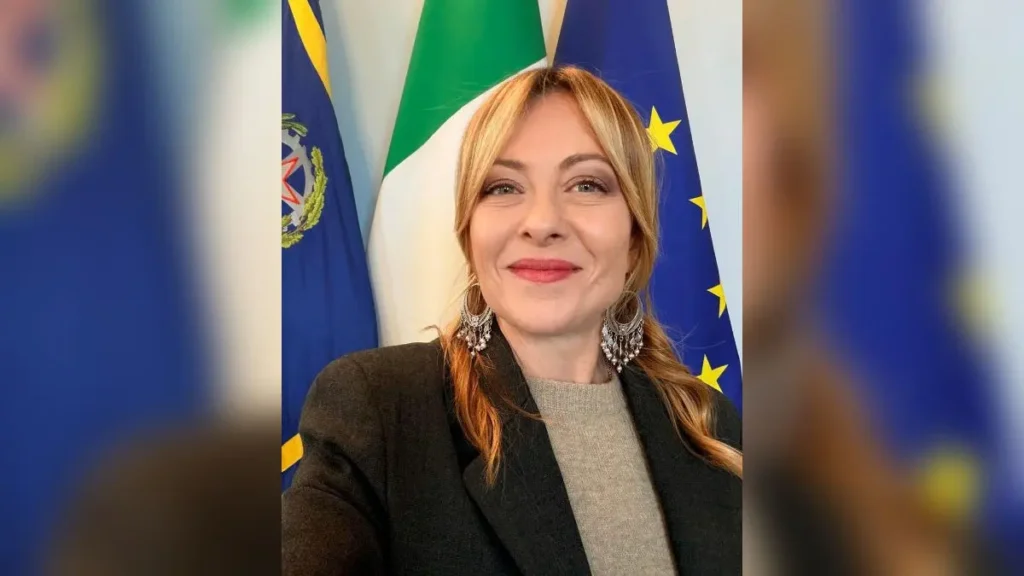
Italian Prime Minister Giorgia Meloni has once again captured global attention—this time not through a formal speech or policy decision, but with a viral selfie. In the image, Meloni is seen wearing traditional Indian jhumka earrings, paired with a bold caption: “We have no masters, and take no orders.”
This seemingly simple post has sparked widespread discussion across political, cultural, and social platforms. From debates on nationalism to conversations about cultural appreciation, the selfie has become a symbol of how modern leaders communicate in the digital age.
The Viral Selfie That Sparked Global Attention
A Unique Cultural Blend
The image quickly went viral due to its blend of politics and culture. Jhumkas—traditional Indian earrings—are widely admired for their intricate design and heritage value. By wearing them, Giorgia Meloni appeared to embrace an element of India’s cultural identity, which resonated strongly with audiences.
Social Media Explosion
The post gained massive traction on platforms like Instagram and X. Within hours, users across the globe began sharing, commenting, and debating the meaning behind both the image and the caption. Hashtags related to Meloni and her statement trended rapidly, turning a single post into an international conversation.
Decoding We Have No Masters
Political Messaging
Meloni’s statement reflects her long-standing political ideology centered on sovereignty and national independence. As a leader, she has consistently emphasized the importance of self-governance and minimizing external influence on domestic decisions.
Global Interpretations
Internationally, the phrase has been interpreted in different ways. Some view it as a strong declaration of independence from global power structures, including organizations like the European Union. Others see it as a broader message aimed at reinforcing Italy’s autonomy in a rapidly globalizing world.
Cultural Symbolism and Debate
Appreciation vs. Appropriation
The choice to wear Indian jhumkas has sparked a parallel cultural debate. Many people, especially from India, appreciated the gesture as a respectful nod to their culture. However, some critics questioned whether it could be seen as cultural appropriation.
Context Matters
Experts argue that intent plays a key role in such discussions. In this case, the gesture appears more appreciative than exploitative, but interpretations vary depending on individual perspectives and cultural sensitivity.
Public and Political Reactions
Supporters’ Perspective
Supporters of Giorgia Meloni have praised her for delivering a bold and clear message. They believe the statement reinforces national pride and sends a strong signal about Italy’s independent stance on global issues.
Critics’ Concerns
Critics, however, argue that such rhetoric could be interpreted as overly nationalist or even isolationist. In a world where international cooperation is essential, strong declarations of independence may complicate diplomatic relationships.
The Rise of Visual Politics
Power of Imagery
The viral selfie highlights how political communication has evolved. Images now play a crucial role in shaping public perception, often delivering messages more effectively than traditional speeches.
Strategic Communication
By combining cultural symbolism with a powerful statement, Meloni created a layered message that appealed to both emotional and ideological audiences. This strategic use of imagery ensured widespread engagement and discussion.
Final Thoughts
The viral jhumka selfie of Giorgia Meloni is more than just a trending image—it represents the intersection of politics, culture, and digital media. Her statement, “We have no masters,” has sparked debates that go far beyond the post itself, touching on themes of sovereignty, identity, and globalization.
Whether viewed as a bold assertion of independence or a controversial political signal, the moment underscores the growing influence of social media in shaping political narratives. In today’s fast-paced digital world, even a single image can ignite global conversations—and Meloni’s selfie is a perfect example of that reality.