
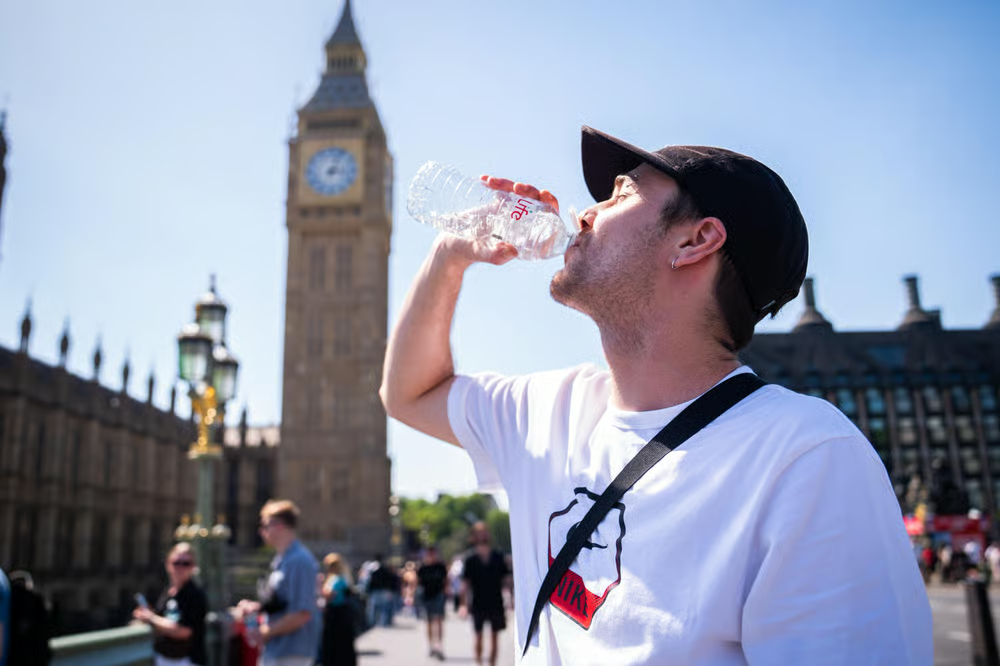
The UK is now experiencing the climate reality scientists have warned about for years. Britain suffered its hottest June day on record today as temperatures hit unprecedented levels leading to nationwide chaos for health services, transport networks, schools and businesses.
This has gone from a weather feature to a national policy discussion so quickly. Now, with climate experts, public health officials, economists and lawmakers all wondering whether the UK is ready for a future of extreme heat as normal not exceptional.
The extreme heat wave has revived the debate about climate adaptation, infrastructure resilience and public safety — as well as government accountability. Though emergency measures were implemented throughout the regions hit, critics say that reactive responses are inadequate in a world with ever-faster climate change.
This new record event highlights the need to prepare both the UK and governments around the globe for a future of more extreme weather.
UK’s Hottest June On Record — The Milestone Of Climate
The UK has seen its hottest June temperature on record, say meteorological agencies. Across the globe, many areas reported significantly higher temperatures than what you would typically see at this time of year—with several regions nearing Southern Europe temperatures.
Climate scientists say such extremes were almost impossible just decades ago. But greenhouse gas emissions are pushing up global temperatures and have significantly increased the chances of long lasting heatwaves.
Climate researchers have said that the UK’s average temperature continues to climb each decade, leading to more frequent and severe heat events. What used to be an exceptional event is now a regular part of British summers.
Hello to this season’s most recent heatwave, an event that is no longer simply a meteorological phenomenon—it’s a stark climate change signal outlining the area’s changing environmental circumstances.
What Makes This Heatwave Different From Others
Longer Duration
Contextualizing this effectively, the existing heatwave is persisting for a number of consecutive days, rather than with short-lived temperature spikes as in previous years during which public health and infrastructure faced risks.
Higher Night-Time Temperatures
Among the most troubling characteristics of this event is the remarkably warm nights. The body needs to recover from the heat of the day, which cooler night temperatures usually allow:
Nonetheless, warm overnight temperatures added to the health risk where vulnerable segments of the population, including elderly people and the underlying medical condition-affected persons.
Widespread Geographic Impact
The heatwave has simultaneously affected vast swathes of England, Wales, Scotland and Northern Ireland – putting huge pressure on the capital’s critical national services.
NHS Facing Strain From Heat Related Illnesses
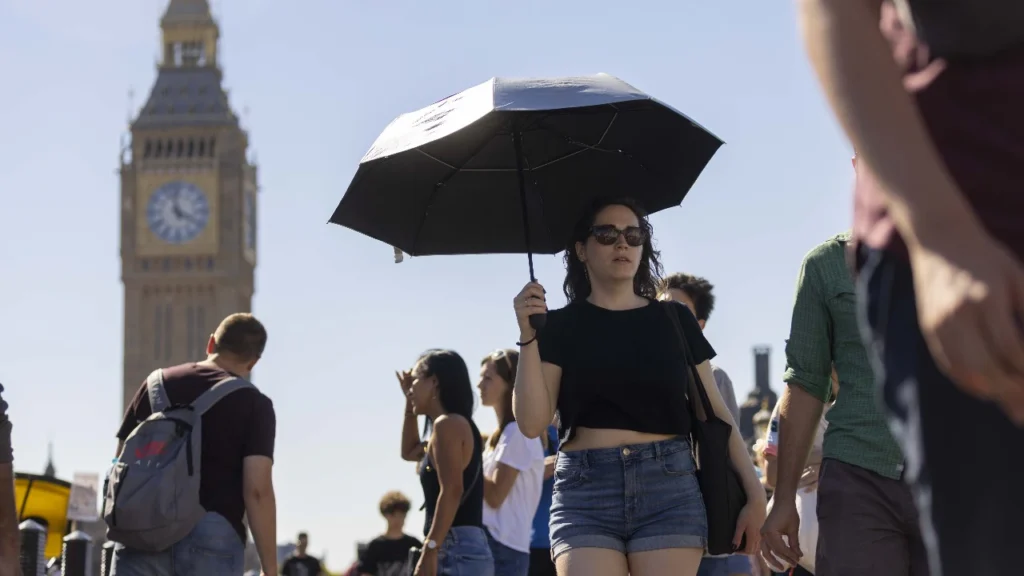
Leading to more heat-related medical emergencies being reported by healthcare providers across the UK.
Patients suffering from the following have been increasing at hospitals:
- Heat exhaustion
- Heatstroke
- Severe dehydration
- Respiratory complications
- Cardiovascular stress
Extreme heat can be deadly, especially among certains groups of people, and officials worry that it is just as lethal as severe winter conditions.
Additional support measures have been activated across several regions to help emergency departments cope with “exceptional” demand for care, including:
Public health authorities estimate that thousands of excess avoidable deaths occur each year across Europe as a result of long-lasting heatwaves, making heat resilience an urgent priority for healthcare services.
Schools Failing to Protection their Students
The heatwave has also strained educational institutions,
It should be no surprise then that a lot of school buildings were designed to keep in heat for cold winters rather than cool during hot summers. When temperatures in classrooms began to rise, emergency safety systems were activated by administrators.
Temporary Measures Introduced
Schools responded by:
- Reducing lesson hours
- Cancelling outdoor activities
- Relaxing uniform requirements
- Increasing hydration breaks
- Moving lessons to cooler areas
Education specialists say future school building projects should obey climate-resilient design codes in order to shield students from more frequent severe meteorological phenomena.
Britains infrastructure was designed for a different climate
The heatwave has revealed weaknesses in infrastructure largely built for a cooler climate.
Railway Disruptions
Metal railway tracks expand in extreme heat, which raises buckling and derailment risks. Operators enforced speed limits for passenger safety.
Road Damage
On several roads, the surfaces deteriorated as asphalt softened after being subjected to high temperatures for days.
Energy Demand Surges
Households, meanwhile, and businesses used more water and power to run air conditioners as well as ventilation equipment.
Experts say the investment of tens of billions of pounds could be needed changing our infrastructure over the next few decades to cope with climate change.
Economic Costs Increase
Extreme heat has hidden costs harvested over time at the expense of economic vitality
Economists highlight several affected sectors:
Agriculture
Heat-induced crop droughts (high temperatures; consequently, diminished yields) are affording manufacturers less grain and loads more water shortages.
Construction
This has impacted outdoor project schedules, reducing productivity and causing delays.
Retail
During heatwaves, consumer spending habits change over time; demand for cooling facilities and products rises dramatically as people are less likely to go out in them.
Insurance
These extreme weather events which will result in increased insurance claims and some businesses risk incurring heavy losses.
The latest studies found climate–related economic losses could rise significantly without adaptation.
Government must act decisively on climate, say experts
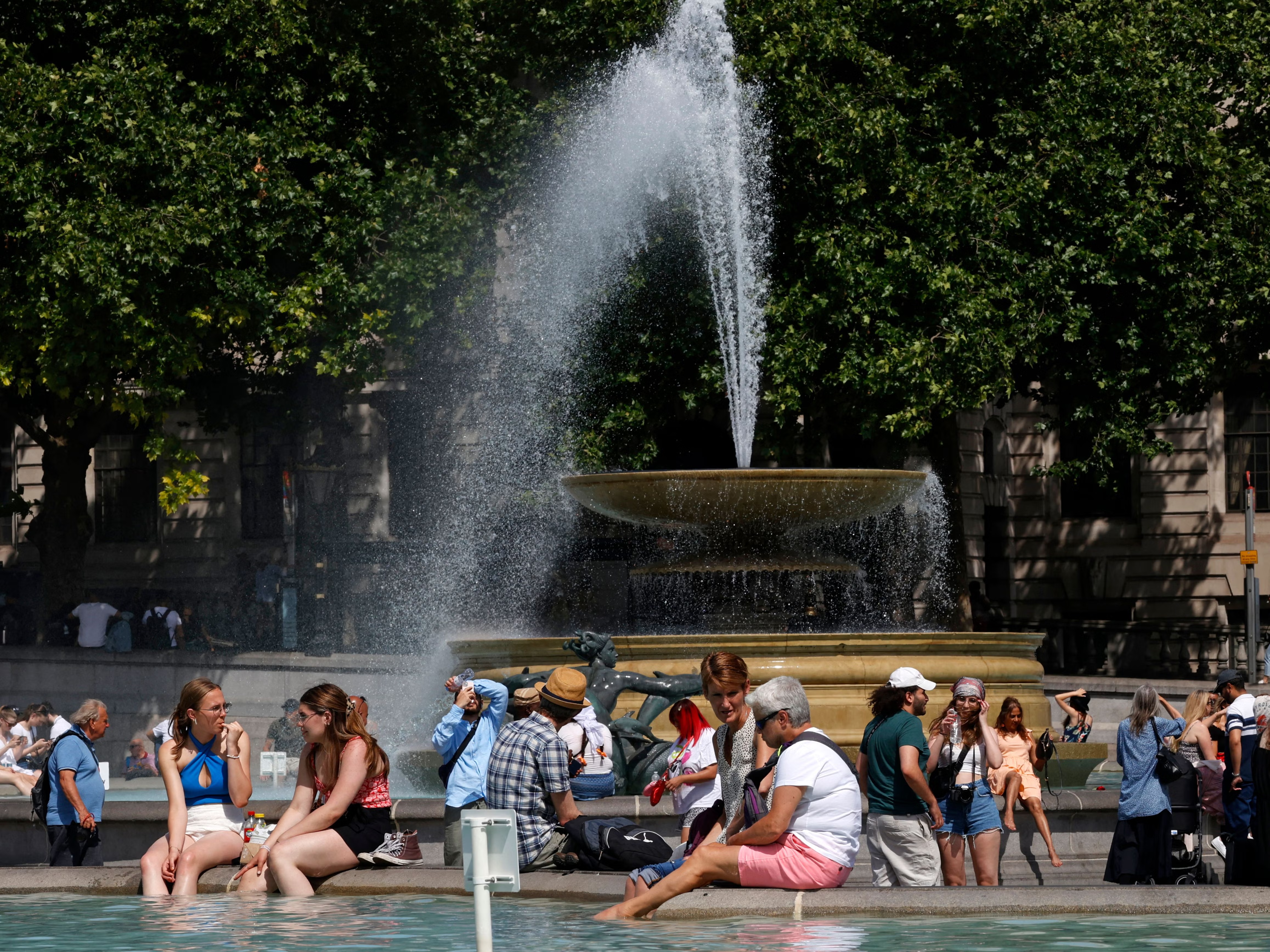
Global environmental researchers argue that the change needs to be from crisis management by governments, to long-term preparedness.
Recommended actions include:
- Expanding urban green infrastructure
- Increasing tree coverage in cities
- Modernizing transport systems
- Improving building insulation and cooling
- Strengthening emergency warning systems
- Investing in renewable energy
- Enhancing healthcare resilience
These experts stress that, in terms of saving lives and ensuring economic security, adaptation measures must no longer be an option but a necessity.
International and Domestic Political Pressure on the UK
The unprecedented heatwave has ramped up scrutiny of government climate political positions.
Environmental organizations and opposition lawmakers also demanded that:
- A comprehensive National Heat Strategy
- Increased climate adaptation funding
- Stronger emissions reduction targets
- Use of climate resilience standards for infrastructure projects
But the country remains woefully unequipped, its critics say: the kind of changes needed have been warned about from scientific consensus for decades.
While government officials claim adaptation preparations have been made, many experts believe that the pace of implementation must enter overdrive.
What This Means For The Future of Britain
Scientists say lethal heat events that are currently affecting the Indian subcontinent could become more and an increasingly severe hazard through decades ahead.
Future challenges may include:
- Greater pressure on healthcare systems
- Increased infrastructure costs
- Higher energy demand
- Reduced agricultural productivity
- Greater risks to vulnerable populations
In order to address these challenges, coordinated action will be required by government agencies, businesses, local authorities and communities.
A heat wave has shown that climate change is no longer a problem of the future. It is already having an impact on public health, economic performance and national infrastructure.
Conclusion
The June heatwave in the UK was a record-breaker and also marks something of an inflection point for discussion about climate in the country. In addition to broken temperature records, the event has laid bare vulnerabilities in health care system, education systems, transportation and public infrastructure.
As lawmakers, scientists and citizens debate what to do next, one thing is crystal clear: the country has to start preparing for extreme heat.
Whether the UK will fail or thrive in embracing a warming world, and how it recovers from the ambient disruption of more frequent extreme climate events is determined by today’s decisions. From the perspective of policymakers, climate change is no longer a theory, it is a fact; the question is now instead one of urgency in combating its effects around the country.