

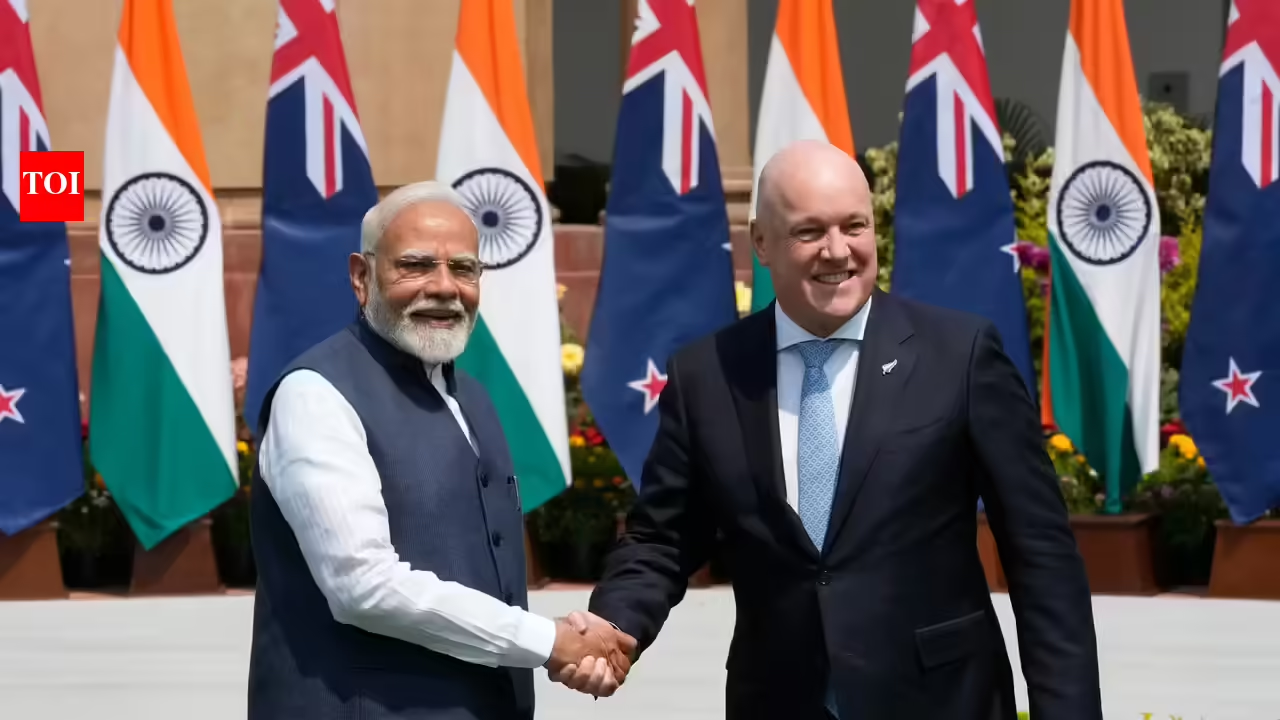
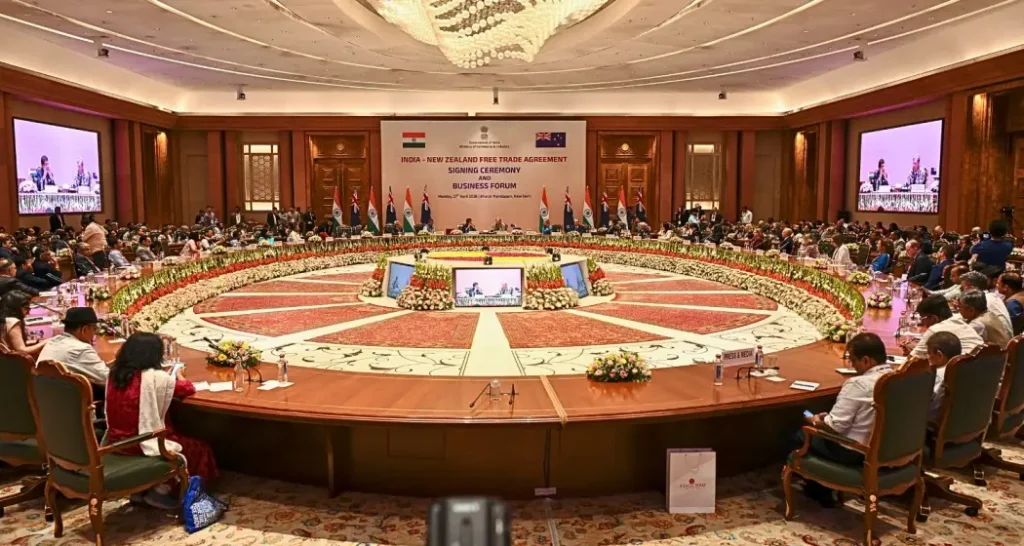
India and New Zealand have once again taken a significant step toward strengthening their economic ties by restarting negotiations for a long-pending Free Trade Agreement (FTA). After years of stalled discussions, both nations are now showing renewed commitment to building a stronger trade relationship. This development comes at a time when global trade is evolving rapidly, and countries are focusing on forming reliable partnerships to ensure economic stability and growth. The revival of these talks highlights the importance both nations place on expanding their economic cooperation.
Why the India–New Zealand FTA Matters
Current Trade Scenario
At present, the trade relationship between India and New Zealand remains modest compared to its full potential. India exports goods such as pharmaceuticals, textiles, machinery, and chemicals to New Zealand. In contrast, New Zealand exports dairy products, wool, meat, and other agricultural items to India. Despite steady growth over the years, trade volumes are still relatively low. A comprehensive FTA could eliminate tariffs, reduce trade barriers, and significantly boost bilateral trade, benefiting businesses in both countries.
Strategic Importance
The strategic value of this agreement goes beyond just trade. For India, strengthening ties with New Zealand helps expand its presence in the Asia-Pacific region. For New Zealand, India represents a vast and rapidly growing market with increasing demand for diverse products and services. This agreement could serve as a gateway for d
Key Areas of Focus in the FTA Talks
Agriculture and Dairy Sector
One of the most sensitive aspects of the FTA negotiations is the agriculture and dairy sector. New Zealand is one of the world’s leading exporters of dairy products, while India has a massive domestic dairy industry that supports millions of farmers. Opening up the market could create concerns among Indian farmers, making this a challenging area of negotiation.
Balancing Domestic Interests
Both countries will need to strike a careful balance. India is likely to protect its farmers by imposing certain safeguards, while New Zealand will push for better access to Indian markets. Finding a mutually beneficial solution will be essential for the success of the agreement.
Technology and Services
India’s strong IT and services sector offers significant opportunities for collaboration. New Zealand companies can benefit from India’s expertise in software development, digital transformation, and outsourcing services. This partnership can also lead to knowledge sharing and innovation.
Digital Collaboration
Emerging technologies such as artificial intelligence, fintech, and cybersecurity present new avenues for cooperation. Joint initiatives in these areas could strengthen both economies and improve competitiveness in the global market.
Investment Opportunities
The FTA is expected to promote cross-border investments between the two countries. Indian companies may explore opportunities in New Zealand’s food processing, tourism, and education sectors, while New Zealand investors could find potential in India’s infrastructure, renewable energy, and startup ecosystem.
Startup Growth Potential
India’s rapidly growing startup ecosystem offers attractive investment opportunities. Increased collaboration could lead to innovation, job creation, and economic growth in both nations.
Challenges in Reaching an Agreement
Trade Imbalances
Negotiating a balanced agreement is always a complex process. India remains cautious about opening its markets too quickly, particularly in sensitive sectors like agriculture and dairy. Ensuring fair competition will be a key challenge.
Regulatory Differences
Differences in standards, regulations, and certification processes can act as barriers to trade. Harmonizing these systems will require time, effort, and mutual understanding.
Compliance Issues
Simplifying compliance procedures and ensuring transparency will be crucial to making the agreement effective for businesses.
Political and Economic Factors
Domestic political considerations and global economic uncertainties can influence the pace of negotiations. However, the decision to restart talks indicates a positive outlook and willingness to move forward.
Potential Benefits of the FTA

Boost to Bilateral Trade
One of the biggest advantages of the FTA will be increased trade between India and New Zealand. Reduced tariffs and improved market access will make exports more competitive and profitable.
Job Creation and Economic Growth
Greater trade and investment can create new job opportunities in sectors such as manufacturing, agriculture, and services. This will contribute to overall economic development in both countries.
Strengthening Diplomatic Relations
Economic cooperation often leads to stronger diplomatic ties. The FTA could pave the way for collaboration in areas like education, tourism, and cultural exchange, further strengthening the relationship.
Global Context and Timing
The restart of FTA talks comes at a time when countries around the world are re-evaluating their trade strategies. Supply chain disruptions and geopolitical tensions have highlighted the need for diversified partnerships. India’s focus on expanding its global trade network aligns well with this trend, making New Zealand a valuable partner in this effort.
Future Outlook
Road Ahead
While challenges remain, the willingness of both countries to return to the negotiating table is a positive sign. Experts believe that a phased approach could help address sensitive issues while gradually expanding trade cooperation.
Long-Term Vision
The India–New Zealand FTA has the potential to evolve into a comprehensive economic partnership. Beyond trade, it could include collaboration in sustainability, innovation, and education, creating long-term benefits for both nations.
Final Thoughts
The decision by India and New Zealand to restart Free Trade Agreement talks marks the beginning of a new chapter in their economic relationship. Although negotiations may take time, the potential benefits are significant. By working together, both countries can unlock new opportunities, strengthen their economies, and build a lasting partnership in the global trade landscape.